TL;DR — Low-Cost vs Full-Service for International Flights
- Short-haul (under 5 hours) — LCCs like IndiGo and Air India Express can save you Rs 3,000–8,000 on routes to Bangkok, Dubai, Singapore, and Kuala Lumpur
- Long-haul (8+ hours) — Full-service carriers like Air India, Emirates, and Singapore Airlines offer better overall value once you factor in baggage, meals, and comfort
- The hidden cost trap — Adding checked baggage + meals + seat selection to an LCC fare can erase 60–80% of the price advantage
- Best strategy — Compare total costs (not just base fares) on HappyFares before deciding
Flying internationally from India has never been more accessible. With IndiGo now operating to over 45 international destinations, Air India Express connecting to 17 overseas cities, and full-service giants like Air India, Emirates, and Singapore Airlines offering competitive fares, Indian travellers face a genuinely interesting decision: should you save money with a low-cost carrier (LCC) or pay more for the full-service experience?
The answer is not as straightforward as picking the cheapest fare. In this detailed guide, we break down exactly what you get (and what you give up) with each option, run the actual numbers on popular routes, and help you make the smartest booking decision for your next international trip.
What Exactly Is Included in an LCC Fare vs a Full-Service Fare?
Before comparing prices, you need to understand what each fare type actually covers. This is where most travellers get caught off guard.
For a deeper look at cabin baggage limits across Indian carriers, check our cabin baggage rules guide for 2026.
The Real Cost Comparison: Delhi to Bangkok (DEL–BKK)
Bangkok is one of the most popular international destinations from India and a perfect case study because both LCCs and full-service carriers operate this route heavily. Let us look at what you actually end up paying.
Note: Fares shown are approximate and based on average economy fares observed in March 2026. Actual prices vary by date, advance booking period, and availability. Always compare the latest fares on HappyFares.
This Delhi–Bangkok example reveals a critical insight: the LCC “base fare” is deceptively low. Once a typical Indian traveller adds checked baggage (because let us be honest, who travels internationally without a suitcase?), a meal for a 4-hour flight, and a window or aisle seat selection, the budget carrier can actually end up costing more than the full-service option.
Key Takeaway
On short-haul international routes where the base fare difference is small (Rs 1,500–3,000), always calculate the total cost with add-ons before picking the LCC. Full-service carriers often win when you need baggage and meals. Use the fare comparison on HappyFares to see the complete picture.
Route-by-Route Breakdown: Where LCCs Win and Where They Do Not
Not all routes are equal. Here is a practical framework based on real fare patterns from popular Indian departure cities.
Routes Where LCCs Usually Win (Short-Haul, Under 5 Hours)
- India to Thailand (Bangkok, Phuket) — IndiGo and Air India Express offer fares starting around Rs 8,500–11,000. If you travel with just cabin baggage and skip the meal, you save Rs 2,000–4,000 vs full-service. Ideal for weekend getaways and solo backpackers.
- India to Malaysia (Kuala Lumpur) — LCC fares from Rs 7,500. The flight is only 4.5 hours, so the comfort difference is manageable.
- India to Sri Lanka (Colombo) — Just 2–3 hours from South Indian cities. LCCs are the clear winner here; you barely need checked baggage for a short trip.
- India to Nepal (Kathmandu) — Under 3 hours from Delhi. Budget is the way to go.
For tips on getting the lowest possible fares on any route, read our guide on how to book the cheapest flights in 2026 — many of those strategies work for international bookings too.
Routes Where Full-Service Carriers Offer Better Value (Long-Haul, 6+ Hours)
- India to UAE (Dubai, Abu Dhabi) — This one is interesting. The flight is only 3.5–4 hours, but the fare gap between IndiGo (from ~Rs 10,300) and Emirates/Air India is often just Rs 2,000–4,000. Once you add baggage (many travellers carry extra luggage to Dubai), the full-service carrier frequently works out cheaper.
- India to Singapore — 5.5–6 hours. IndiGo fares start from ~Rs 7,700, but Singapore Airlines’ all-inclusive fare (with 30 kg baggage, meals, and entertainment) is competitive once you add LCC extras.
- India to UK (London) — 9–10 hours. Air India now operates modern aircraft on this route. On a flight this long, you absolutely want included meals, entertainment, and generous baggage. LCCs on this route rarely save money after add-ons.
- India to USA (New York, San Francisco, Chicago) — 15–18 hours. Full-service is the only sensible choice. Multiple meal services, 46 kg baggage, and personal entertainment screens are not luxuries on a flight this long — they are necessities.
- India to Australia (Melbourne, Sydney) — 12–14 hours. Similar logic to US routes. Air India and Singapore Airlines (via Singapore) provide far superior value.
Thinking about upgrading your seat on a long-haul Air India flight? Our Air India premium economy review covers whether the upgrade is genuinely worth the extra cost.
The Comfort Factor: Does It Really Matter?
On a 2-hour flight from Bengaluru to Colombo, comfort differences are negligible. You sit down, the seatbelt sign goes off, maybe you have a coffee, and you land. The narrower seat pitch on an LCC is barely noticeable.
But on a 6-hour flight to Singapore or a 9-hour flight to London? The experience diverges dramatically:
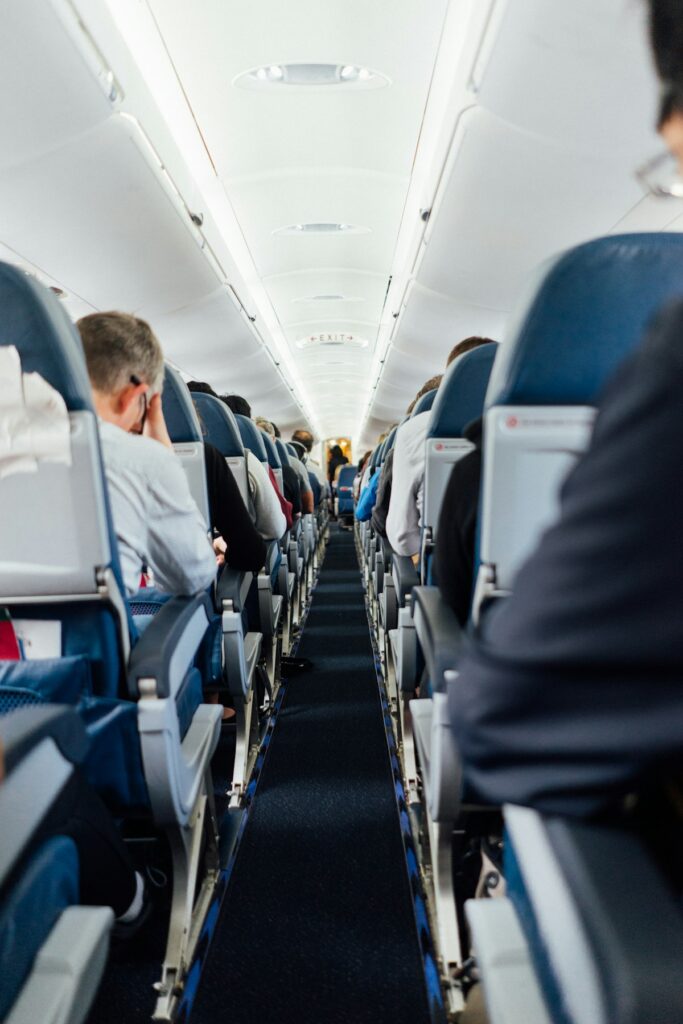
Seat pitch and legroom: Full-service international economy typically offers 31–34 inches of seat pitch. LCCs squeeze in 28–30 inches. Those 3–4 inches make a remarkable difference when you are sitting for 8+ hours, especially for taller passengers.
Meals: A full-service carrier on a Delhi–London flight serves 2 full meals plus a snack service, with beverage rounds throughout. On an LCC, you either go hungry, pack your own food, or pay Rs 500–800 per meal (adding Rs 1,500–2,400 for a long-haul journey).
Entertainment: Emirates, Singapore Airlines, and Air India all offer seatback screens with hundreds of movies, TV shows, and music. On an LCC, you are relying on your phone or tablet — which means downloading content before the flight and managing battery life.
Blankets and pillows: Provided on full-service carriers, absent on most LCCs. Seems small until you are trying to sleep on an overnight flight at 35,000 feet with the air conditioning on full blast.
When Choosing a Low-Cost Carrier Makes Perfect Sense
Despite the comparison above, there are absolutely situations where an LCC is the smarter choice:
- You travel light. If you can manage with just a 7 kg cabin bag (common for 3–4 day trips), LCCs save you real money because the biggest add-on cost (checked baggage) disappears entirely.
- The flight is under 4 hours. Bangkok, Kuala Lumpur, Colombo, Kathmandu — on these short sectors, you do not need meals, entertainment, or extra legroom. The price difference matters more than comfort.
- You are on a tight budget. For students, solo backpackers, and budget travellers, every rupee counts. Skipping all add-ons and accepting the basic experience is a perfectly valid choice.
- The fare difference is substantial. If an LCC fare is Rs 5,000+ cheaper than the full-service option (even after adding baggage), the savings are real and meaningful.
- You are flexible with dates. LCCs often have sharper sales and flash discounts. If you can shift your travel dates by a few days, you can grab exceptional deals.
When Full-Service Is Worth Every Rupee
- Flights over 6 hours. The comfort gap becomes substantial. Included meals, entertainment, and legroom are not luxuries — they are part of surviving a long flight without misery.
- Family travel. Travelling with children means extra baggage (strollers, car seats, extra clothes). Full-service carriers’ generous baggage allowances save families Rs 3,000–8,000 in add-on fees.
- Business travel. If you need to arrive rested and ready for meetings, the full-service experience (reclining seats, meal service, quiet cabin) is worth the premium.
- When the fare difference is under Rs 2,000. At that point, you are paying less than the cost of the add-ons you would buy on the LCC anyway.
- Connecting flights and layovers. Full-service carriers usually have better connection logistics, lounge access on premium fares, and more forgiving rebooking policies if you miss a connection. Our layover guide explains how to handle connections smoothly.
Key Takeaway
The “right” choice depends on your specific trip: destination, duration, luggage needs, and travel style. There is no universal answer. The best approach is to compare total costs on HappyFares, where you can see fares from both LCCs and full-service carriers side by side.
Cancellation and Change Flexibility: A Crucial Difference
This is one area where full-service carriers hold a significant advantage, and it matters more than most travellers realise.
Low-cost carriers: Change fees on international routes are typically Rs 3,000–5,000, plus any fare difference. Cancellation refunds are often limited to a credit shell or partial refund. The cheapest fare classes may be entirely non-refundable.
Full-service carriers: Offer more fare classes with varying flexibility. Even economy fares often allow date changes with lower fees (Rs 1,500–3,000). Higher fare classes may offer free changes or full refunds. During disruptions, full-service carriers generally rebook passengers more smoothly.
For international travel, where visa issues, health emergencies, or plan changes can happen, the flexibility of a full-service fare provides genuine peace of mind. It is a form of insurance built into the ticket price.
If you are looking at travel insurance to add another layer of protection, our guide to the best travel insurance for international trips covers what to look for.
The Add-On Cost Trap: Real Numbers
Let us put actual figures to the typical add-ons an Indian traveller purchases on an LCC international flight:
Before heading to the airport, make sure to complete web check-in — it saves time and lets you select your seat in advance on many carriers.
Popular Indian Airlines for International Flights: A Quick Overview
Low-Cost Carriers
IndiGo (6E): India’s largest airline now flies to 45+ international destinations across Asia, the Middle East, Central Asia, and select European cities (Athens, London Gatwick, Copenhagen). IndiGo deploys the fuel-efficient A321neo on most international routes and Boeing 787 Dreamliners on long-haul sectors. Known for punctuality and operational efficiency. Best for short-to-medium haul international travel.
Air India Express (IX): Operates to 17 international destinations, primarily in the Middle East (Dubai, Abu Dhabi, Sharjah, Jeddah, Muscat) and select Southeast Asian cities. Part of the Air India (Tata) group. Offers competitive fares on India-Gulf routes, which is particularly useful for the large Indian diaspora travelling to the Middle East.
Full-Service Carriers
Air India (AI): India’s flag carrier, now under Tata ownership and undergoing a major transformation. Operates to all major international hubs including London, New York, San Francisco, Toronto, Melbourne, and Singapore. Expanding its fleet with new Airbus A350s and Boeing 787s. Offers solid value on long-haul routes with included baggage (2 x 23 kg), meals, and entertainment.
Emirates (EK): Dubai-based carrier with extensive connectivity from multiple Indian cities. Known for its in-flight entertainment (ice system with 6,500+ channels), generous baggage allowance (30 kg), and Dubai hub for connections to Europe, Africa, and the Americas.
Singapore Airlines (SQ): Consistently rated among the world’s best airlines. Operates from Delhi, Mumbai, Bengaluru, Chennai, Hyderabad, and other cities. Excellent for travel to Southeast Asia, Australia, and East Asia via the Singapore hub.
For a detailed head-to-head on two of India’s biggest carriers, read our IndiGo vs Air India comparison.
How to Decide: A Simple Framework
Use this decision checklist before booking your next international flight:
- Check the flight duration. Under 4 hours? LCC is usually fine. Over 6 hours? Lean towards full-service.
- Calculate your add-ons. Add the cost of checked baggage, meals, and seat selection to the LCC fare. Compare this total with the full-service fare.
- Consider your luggage. Light packer with just a backpack? LCC wins. Carrying a large suitcase? Full-service baggage inclusion saves money.
- Think about flexibility. Fixed travel plans? LCC is fine. Uncertain dates? Full-service offers better change policies.
- Factor in comfort needs. Can you handle minimal legroom and no entertainment for the flight duration? Be honest with yourself.
- Compare on HappyFares. See all airlines on your route with transparent pricing. No hidden costs, no surprises.
Pro Tips for Getting the Best International Fare
Regardless of whether you choose an LCC or full-service carrier, these strategies help you get the lowest fare:
- Book 6–8 weeks in advance for short-haul international flights and 2–3 months ahead for long-haul routes
- Fly on Tuesdays and Wednesdays — these are consistently the cheapest days for international travel
- Use fare alerts on HappyFares to get notified when prices drop on your preferred route
- Consider nearby airports — flying from Bengaluru instead of Chennai (or vice versa) can save thousands on certain routes
- Check fare bundles on LCCs — IndiGo’s Super 6E and Air India Express’s Value fare bundles often include baggage and meals at a discount vs buying add-ons separately
- Book international flights during airline sales — IndiGo and Air India Express run major sales during Republic Day, Independence Day, and Diwali seasons
For more money-saving booking strategies, our comprehensive guide to cheap flight booking has tips that apply to international routes too.
Frequently Asked Questions
Is IndiGo good for international flights?
Yes, IndiGo operates international flights to over 45 destinations including Bangkok, Dubai, Singapore, Kuala Lumpur, and select European cities. For short-haul international routes under 5 hours, IndiGo offers excellent value. For longer routes, they now operate wide-body Boeing 787 Dreamliners with improved comfort. Compare fares on HappyFares to find the best deals.
How much extra does baggage cost on low-cost international flights?
On low-cost carriers like IndiGo, pre-booked checked baggage for international routes typically starts at around Rs 1,280 for an additional 5 kg and goes up depending on weight and route. Booking baggage at the airport costs significantly more, often Rs 1,200 per kg. Full-service carriers like Air India and Singapore Airlines include 25–46 kg of checked baggage in the base fare.
Are full-service airlines always more expensive than budget carriers?
Not always. When you add checked baggage (Rs 1,500–4,000), meals (Rs 400–800), seat selection (Rs 300–1,200), and other add-ons to a low-cost carrier fare, the total can come very close to or even exceed a full-service fare. This is especially true on routes like Delhi–Dubai and Delhi–Singapore where the base fare gap is narrow.
Which is better for long-haul flights to the US, UK, or Australia?
For flights over 8–10 hours to destinations like London, New York, Sydney, or Melbourne, full-service carriers like Air India, Emirates, and Singapore Airlines offer significantly better value and comfort. Included meals, generous baggage, better seat pitch, and entertainment systems make long flights much more bearable. The fare difference on long-haul routes is often minimal once you factor in all add-ons.
Can I get a refund on a low-cost carrier international ticket?
Refund and change policies vary by airline and fare type. Low-cost carriers generally have stricter policies with higher change fees (Rs 3,000–5,000 for international routes). Full-service carriers typically offer more flexible rebooking options, especially on higher fare classes. Always check the cancellation policy before booking. On HappyFares, the fare rules are displayed clearly during the booking process.
Does IndiGo serve meals on international flights?
IndiGo does not include complimentary meals on most international routes with the basic fare. However, the Super 6E fare bundle includes a complimentary meal. You can also pre-book meals starting from around Rs 350–500 per meal. On short flights under 4 hours, this may not matter much, but on 5–6 hour flights, pre-booking a meal is recommended.
What is the cheapest way to fly internationally from India?
The cheapest approach depends on your destination. For short-haul routes (Bangkok, Dubai, Kuala Lumpur, Singapore), booking a low-cost carrier with minimal add-ons can save Rs 3,000–8,000. For long-haul routes, full-service carriers on sale often match or beat LCC prices after add-ons. Use HappyFares to compare all airlines on your route and find the lowest total fare.
Related Articles
- How to Book the Cheapest Flights in India — 2026 Guide
- IndiGo vs Air India: Which Is Better?
- Air India Premium Economy Review: Is the Upgrade Worth It?
- Cabin Baggage Rules for Indian Airlines — 2026 Full Guide
- Flight Layovers Explained: Short, Long & Overnight Guide
- Best Travel Insurance for International Trips from India (2026)
- Web Check-In Made Easy: All Indian Airlines Explained
Ready to Book Your International Flight?
Compare low-cost and full-service fares side by side. See transparent pricing with no hidden charges. Book with confidence on HappyFares.
Price Disclaimer: All fares mentioned in this article are approximate and based on publicly available data as of March 2026. Actual fares vary by travel date, booking date, availability, and fare class. Add-on charges are indicative and subject to change by airlines. For the most accurate and up-to-date pricing, please search on HappyFares. Flight routes and airline policies may change without notice. Refer to DGCA for regulatory information and individual airline websites (IndiGo, Air India, Air India Express) for official fare details and policies.